
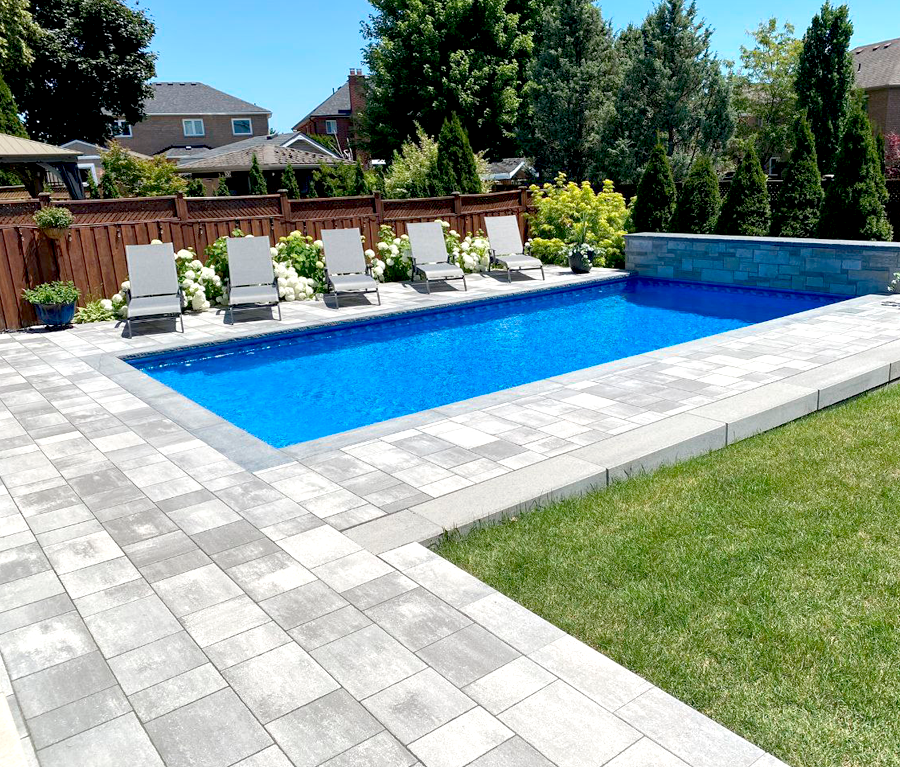
A properly installed interlocking driveway or patio in Toronto is built to last 25–30 years. The maintenance schedule below is what stretches it to 35–40. Most of it is DIY; the deep work every 5–10 years is where a contractor matters.
The 5-minute version
| Season | Action | Tools | Time |
|---|---|---|---|
| Early spring | Clean debris, inspect joints | Broom, leaf blower | 30 min |
| Late spring | Refresh polymeric sand spots | Sand, hose | 1–2 hours |
| Summer | Spot weed treatment, sweep | Vinegar or torch | 15 min monthly |
| Fall | Deep clean before winter | Hose, broom | 1 hour |
| Winter | Use sand/kitty litter, not salt | — | as needed |
Plus every 5 years: full polymeric sand refresh ($400–$900 DIY in materials, $1,200–$2,500 hired).
Why Toronto’s climate matters
Three things specific to the GTA hit interlocking pavers harder than they hit pavers anywhere milder:
- Freeze-thaw cycles: 35–55 per year. Water in the joints freezes, expands, and lifts polymeric sand or pavers.
- Salt and de-icers: heavy use on city streets and many driveways. Even Toronto-rated pavers wear faster with constant salt exposure.
- Lake-effect humidity: more moisture in joints means more weed seed survival and more polymeric sand wash-out.
The maintenance schedule below is built around these three pressures.
Spring maintenance
Early spring (when overnight temps stay above freezing, usually mid-March in Toronto) is the most important maintenance window. Snow has melted, the surface is clean, and you can see what winter did.
What to do in spring
- Clear debris: leaves, gravel, salt residue. Use a broom or leaf blower, not a pressure washer.
- Inspect every joint: walk the entire driveway or patio looking for missing polymeric sand. Spots typically thin out near edges, drainage points, and high-traffic areas.
- Spot-refresh polymeric sand: in any joint where sand is below the chamfer (the small bevel at the paver edge), top it up. Use a soft brush to push the sand down, then mist lightly.
- Check edge restraints: the plastic or metal strip around the perimeter. If you see daylight between it and the pavers, or if it has shifted, plan a interlock repair call before summer.
- Spot-treat weed germination: small weeds early in the season are easy to kill. White vinegar, boiling water, or a propane torch (carefully) work well.
What NOT to do in spring
- Do not pressure-wash. The high-pressure water strips polymeric sand and creates the wash-out you are trying to prevent.
- Do not seal. If you are going to seal, do it in summer when the surface is fully dry — never in early spring.
- Do not power-broom against the pavers. A regular push broom is enough.
Summer maintenance
Summer is mostly about staying ahead of weeds and watching for early settling.
Monthly summer routine
- Sweep the driveway/patio with a regular broom.
- Spot-treat any new weeds (vinegar, torch, or hand-pulling for tap-rooted weeds).
- Check for any new dips or sunken pavers. Note them; address in fall.
- Rinse with a hose (gentle stream, not pressure) after heavy storms to wash silt off the surface.
Optional summer deep clean
Once per summer, mid-to-late season, do a slightly more thorough wash:
- Wet the surface with a regular garden hose.
- Sprinkle a paver-safe cleaner (Techo-Bloc Eco-Clean, Alliance Outdoor Living, or 1:10 dish soap solution) on stained areas.
- Scrub with a stiff broom (not wire — wire can scratch the paver surface).
- Rinse thoroughly.
- Let dry fully (24+ hours).
This is also the right time to do any sealing if you choose to seal (see below).
Fall maintenance
Fall is the second most important window. The goal: get the surface clean and the joints full going into winter.
What to do in fall
- Final cleanup: leaves and organic debris must be off before snow. Wet leaves trapped under snow stain pavers and feed mould in joints.
- Top up polymeric sand: any spots that thinned over summer. This is your last chance before snow lock everything in for 4 months.
- Inspect drainage: where does water pool? Standing water in fall freezes in winter and accelerates frost heave.
- Apply sealer if you choose to seal: dry surface, daytime temp 10–25°C, no rain in forecast for 24+ hours.
Winter maintenance — the salt question
This is the single biggest mistake Toronto homeowners make with their interlocking pavers.
What works for ice
- Sand or sandbox sand: provides traction, does not damage pavers.
- Calcium chloride (rated for pavers): less damaging than rock salt, works in colder temperatures.
- Magnesium chloride: similar to calcium chloride, slightly less aggressive on plants.
- Plain kitty litter: cheap, good traction, no chemical damage.
What hurts your pavers
- Rock salt (sodium chloride): standard road salt. Even Toronto-rated pavers eventually fade with constant use over 15–20 years.
- Urea-based de-icers: nitrogen leaching damages adjacent grass and plants and can stain certain pavers.
- Aggressive ice picks or metal shovels: chip paver edges. Use plastic-edged or rubber-edged shovels.
Plowing strategy
If you hire a plow service, confirm they:
- Use a plastic or rubber edge on the blade, not steel.
- Lift the blade slightly (½”–1″) to avoid catching on paver edges.
- Pile snow off the driveway, not on the lawn edge (snow piles freeze and chunk pavers near the edge).
For more on winter chemical impact, see the salt damage prevention guide.
The 5-year deep maintenance
Every 4–6 years, polymeric sand needs a full refresh — not just spot top-ups. This is the difference between a 25-year driveway and a 35-year driveway.
What it involves
- Remove old polymeric sand from joints. Power broom, leaf blower, or stiff push broom.
- Pressure-wash carefully — only if all polymeric sand is already removed. The pressure water cleans biological growth from joint walls.
- Let the driveway dry completely — 48 hours minimum, no rain.
- Sweep new polymeric sand into joints to ¼” below paver surface.
- Vibrate the surface with a plate compactor (with a paver mat) to settle the sand.
- Top up sand as needed.
- Mist with hose in 4–6 passes to activate polymer.
- Cure 48 hours before driving on.
DIY material cost: $150–$400 depending on driveway size. Pro service: $1,200–$2,500.
This is the single most impactful maintenance task. Skipping it is the #1 reason interlocking driveways in Toronto need interlocking driveway rebuild work earlier than necessary.
To seal or not to seal?
The honest answer: you do not need to seal Toronto-rated pavers. They are designed to perform without sealer for 25+ years.
Sealing is purely cosmetic. Pros and cons:
Pros – Slight darkening / wet-look enhances paver colour. – Easier to clean future stains. – Marginal weed reduction.
Cons – $600–$1,500 every 3–5 years. – Can trap moisture if pavers are not fully dry. – Sealing within the first 12 months of install can lock in efflorescence and look blotchy permanently. – Adds nothing to structural durability.
If you do seal: choose a penetrating sealer (not film-forming), apply only after pavers have completed their first 12 months, and reseal every 3–5 years to maintain the look.
When DIY maintenance is no longer enough
Three signals that maintenance has crossed into repair territory:
- Multiple sunken pavers in the same area — base problem.
- Joints that will not stay full no matter how much polymeric sand you add — drainage or edge restraint issue.
- Wavy or rippled surface visible from a distance — base failure.
At that point, see the interlock repair guide or request a free maintenance quote for an honest read on whether you need a section repair or a full rebuild.
FAQ
How often should I refresh polymeric sand on my Toronto driveway? Every 4–6 years for a full refresh. Spot top-ups every spring as needed.
Is salt safe on Toronto-rated interlocking pavers? Modern pavers tolerate occasional salt use. Constant heavy salt accelerates surface fade over 15–20 years. Use sand, kitty litter, or calcium chloride as gentler alternatives.
Should I pressure-wash my interlocking driveway? Only as part of a full polymeric sand refresh. Casual pressure washing strips sand from joints and creates the wash-out you are trying to prevent.
Do I need to seal my interlock pavers? No — Toronto-rated pavers do not need sealing for durability. Sealing is purely cosmetic and is optional.
What is the most important maintenance task? Refreshing polymeric sand every 4–6 years. This single task is the difference between a 25-year and a 40-year interlock driveway.
For maintenance work that is beyond DIY scope, request a free quote and we will inspect your driveway or patio honestly.




Leave A Comment